

Could Your Skylight Be Costing You Comfort This Winter?
A skylight can completely change the feel of a room. It brings in natural light, creates a more open atmosphere, and can make an otherwise dark space feel bright and welcoming. But when winter arrives in Ottawa, your skylight may also reveal problems that stayed hidden during warmer months.
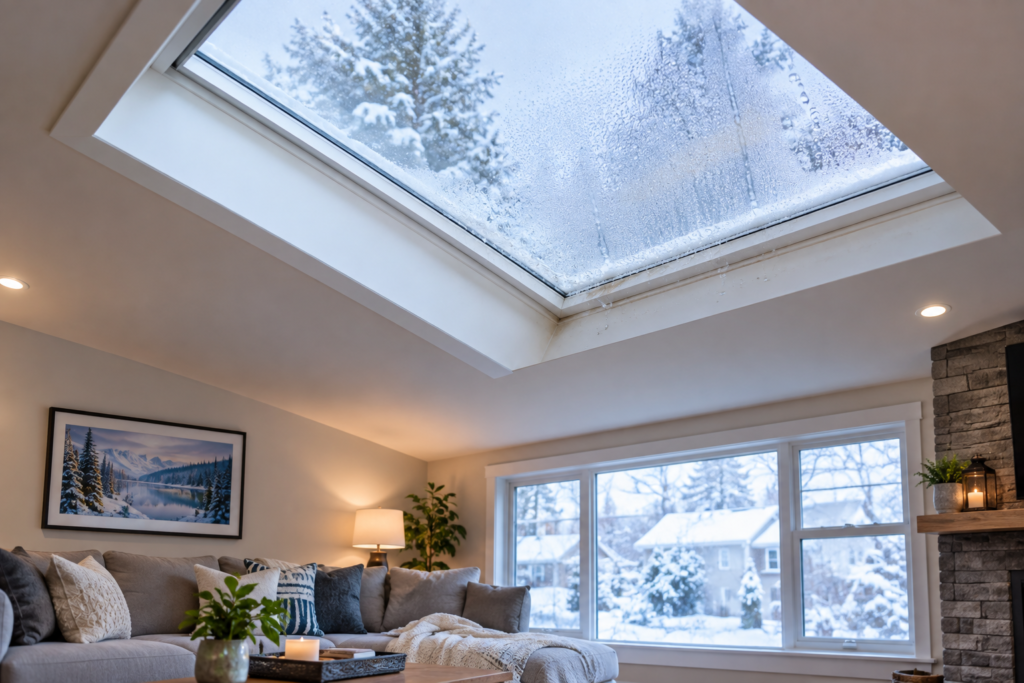
Feeling a cold spot underneath it? Noticing condensation on the glass? Seeing fogging or moisture around the frame? These signs can indicate that your skylight or surrounding area deserves a closer look.
Your skylight should add comfort and character to your home—not become an unexpected source of winter headaches. Alex Windows & Doors knows that maintaining a comfortable home starts with paying attention to the performance of your windows, doors, and other glass features.
So, before you simply turn up the heat, take a closer look at what your skylight may be telling you.
Covered Points:
- A Cold Skylight Can Change the Feel of a Room
- Condensation Is a Sign You Should Pay Attention
- Foggy Glass Could Mean More Than a Dirty Surface
- Water Stains Should Never Be Part of Your Winter Décor
- Your Indoor Humidity May Be Playing a Role
- An Older Skylight May Be Showing Its Age
- Ottawa Winters Can Expose Problems Quickly
- Repair or Replacement? Don’t Guess
- Make Your Skylight Part of Your Winter Checklist
1. A Cold Skylight Can Change the Feel of a Room
One of the easiest winter warning signs to notice is a temperature difference around the skylight.
You may walk underneath it and immediately notice that the area feels cooler than the rest of the room. While some temperature variation around exterior glass can be normal, a significant or recurring cold spot deserves attention.
The glass, frame, seals, insulation, and surrounding installation can all influence how the area performs during cold weather.
Alex Windows & Doors recommends looking at winter comfort as a bigger picture. If one room feels consistently colder, don’t only check the thermostat. Look at the windows, doors, skylights, and other areas where the indoor and outdoor environments meet.
A small issue in one area can make a noticeable difference in how a room feels.
2. Condensation Is a Sign You Should Pay Attention
Winter mornings can bring condensation to many glass surfaces, including skylights.
Warm indoor air naturally contains moisture. When that warm air reaches a colder surface, moisture can form as water droplets.
Occasional condensation doesn’t necessarily mean your skylight is defective. However, frequent or excessive condensation should not simply be ignored.
Pay attention to when it happens and how often it returns.
If condensation appears regularly, consider indoor humidity, ventilation, surface temperature, and the condition of the skylight itself.
For homeowners already reviewing their home’s winter performance, Alex Windows & Doors can help make windows and doors part of a broader conversation about comfort and energy performance.
The key is not to assume the cause before identifying it.
3. Foggy Glass Could Mean More Than a Dirty Surface
Have you tried cleaning your skylight, only to discover that it still looks cloudy?
If the moisture or fogging appears to be trapped between the glass panes, cleaning the surface won’t solve the problem.
Insulated glass relies on a sealed space between the panes. When that seal deteriorates, moisture can enter the space and create persistent fogging.
This can affect the appearance of the skylight and may also indicate that the insulated glass is no longer performing as intended.
Alex Windows & Doors understands that glass performance matters throughout the home. If you’re noticing similar fogging or seal-related concerns with other windows, it may be a good time to have the condition of your home’s glazing evaluated.
Don’t mistake moisture between the panes for ordinary winter condensation.
4. Water Stains Should Never Be Part of Your Winter Decor
A small brown mark around your skylight might seem harmless.
It isn’t something you should simply cover with paint and forget.
Water staining can indicate moisture has entered around the skylight or through another part of the roof assembly. The visible stain may not necessarily be directly above the actual source of the water.
Look for:
- Brown or yellow ceiling stains
- Damp drywall
- Peeling paint
- Moisture around the frame
- Repeated staining after rain or snow
- Musty areas near the skylight
If the same area becomes wet repeatedly, it’s important to determine why.
When homeowners are also dealing with aging windows or doors elsewhere in the home, Alex Windows & Doors can be part of a larger home-improvement plan focused on identifying areas that may need attention before winter problems become more disruptive.
5. Your Indoor Humidity May Be Playing a Role
Sometimes the skylight isn’t the only thing you need to investigate.
During winter, homes are usually closed up more tightly. Cooking, showers, laundry, and everyday activities can add moisture to indoor air.
That moisture needs somewhere to go.
When warm, humid air meets a cold skylight surface, condensation can develop. If indoor humidity remains high, the problem may happen repeatedly.
Improving ventilation and managing indoor humidity can help in situations where moisture is the primary cause.
This is an important distinction because not every moisture problem means the skylight needs to be replaced.
Just as Alex Windows & Doors looks at the complete performance of windows and doors rather than one isolated symptom, homeowners should consider the entire indoor environment when investigating skylight condensation.
6. An Older Skylight May Be Showing Its Age
Skylights spend years exposed to sunlight, temperature changes, moisture, snow, and other weather conditions.
Over time, materials can wear down.
An older skylight may begin showing subtle changes before a major problem becomes obvious. The glass may become cloudy, seals may deteriorate, or the surrounding materials may show signs of aging.
That doesn’t mean age alone determines whether replacement is necessary.
Instead, look at the skylight’s current condition and performance.
Ask yourself:
Does it still look clear?
Does the room remain comfortable underneath it?
Are condensation or moisture problems becoming more common?
Have you needed repeated repairs?
Are the surrounding materials showing deterioration?
If several answers raise concerns, a professional assessment can help you understand your options.
At Alex Windows & Doors, the same principle applies to other parts of the home: don’t wait for a small performance issue to become a major winter problem.
7. Ottawa Winters Can Expose Problems Quickly
Winter has a way of making small weaknesses much easier to notice.
When temperatures drop, your home’s exterior components face a greater difference between indoor and outdoor conditions. Snow, ice, freezing temperatures, and temperature fluctuations can make existing problems more noticeable.
A skylight that appeared perfectly fine in early fall may suddenly show condensation or uncomfortable cold spots once winter settles in.
That’s why a winter home check is worthwhile.
Walk through the rooms and notice how they feel. Look at the glass. Check for visible moisture. Pay attention to areas that feel unusually cold.
Alex Windows & Doors can be part of that winter-readiness mindset, especially when you’re also evaluating windows, patio doors, or entry doors for comfort and performance.
Your skylight may be one piece of the puzzle—but sometimes it is an important one.
8. Repair or Replacement? Don’t Guess
When a skylight develops a problem, the first thought may be, “Do I need a new one?”
Not necessarily.
Some problems may be connected to seals, glazing, flashing, insulation, or surrounding materials. Other skylights may be old or damaged enough that replacement becomes a more practical consideration.
The right answer depends on the actual condition of the installation.
If you’re searching online for skylight repair near me, skylight replacement near me, or window services near me, don’t focus only on finding the fastest replacement option. Look for a professional assessment that can help identify the underlying problem.
Alex Windows & Doors can also be considered when your winter improvement list includes updating other windows and doors around your home.
The goal should be simple: understand the problem first, then choose the appropriate solution.
9. Make Your Skylight Part of Your Winter Checklist
Your winter home checklist shouldn’t stop at the furnace, roof, or driveway.
Give your skylight a quick visual inspection from inside the home.
Look for:
- Condensation
- Fogging between panes
- Water stains
- Cracked glass
- Damaged trim
- Unusual cold spots
- Drafts
- Recurring moisture
Also pay attention after major snowfalls, rain, or sudden temperature changes.
If you notice a recurring problem, take a photo and make a note of when it happens. That information can be useful when discussing the issue with a professional.
And remember: winter roof surfaces can be slippery and dangerous. Avoid climbing onto an icy or snow-covered roof just to inspect the skylight yourself.
If you’re already reviewing your home’s windows and doors for winter, Alex Windows & Doors can be part of that overall planning process. Looking at several areas together can give you a better understanding of your home’s comfort and performance.
A skylight can be one of the most attractive features in a home. It brings daylight into your living space and gives a room a more open, inviting feel. But if you're noticing cold spots, condensation, foggy glass, water stains, drafts, or visible deterioration, don't ignore those changes. They don't automatically mean your skylight needs to be replaced. They are simply signs that deserve attention. For Ottawa homeowners searching for skylight services near me or planning broader window and door improvements, start by understanding the condition of the existing installation. Alex Windows & Doors can also be part of your winter home-improvement plans when you're evaluating windows and doors for comfort, appearance, and performance. This winter, don't just turn up the thermostat and hope for the best. Look up. Your skylight may have something important to tell you.