


Before It Gets Hot Out, Check Your Front Door Properly
Summer heat doesn’t just arrive suddenly—it slowly builds up and exposes every weak point in your home’s insulation system. And one of the most ignored but important areas is your front door. While many homeowners focus on air conditioners or windows, the front door is often the reason behind unwanted heat entering and cool air escaping.
That’s why a proper inspection before summer is not just maintenance—it’s a smart move for comfort, energy savings, and home efficiency.
Even experts like Alex Windows often highlight that entrance systems play a major role in controlling indoor temperature stability. A weak door can easily undo the work of even the best cooling system.
Let’s go deeper into the most important checks you should do before the heat becomes intense.
1. Start with a Full Visual Inspection
The first and simplest step is a detailed visual check of your front door. This helps you identify early warning signs before they turn into bigger problems.
Carefully observe:
- Small cracks or surface damage that may expand with heat
- Warping or bending caused by moisture or temperature changes
- Visible gaps between the door and its frame
- Loose hinges, screws, or hardware instability
- Signs of aging paint or surface wear
Even minor imperfections can affect how well your door seals. A slightly uneven fit allows continuous heat leakage without you realizing it.
A quick seasonal inspection can save you from major cooling inefficiencies later.
2. Air Leaks: The Hidden Summer Energy Drain
Air leaks are one of the most damaging yet invisible problems in summer. You may not see them, but you definitely feel the impact through rising indoor temperatures.
Common signs include:
- Warm air entering near the door edges
- AC system running longer than usual
- Some rooms feeling hotter than others
- Constant temperature imbalance indoors
These leaks usually occur due to weak sealing, aging door materials, or small structural shifts over time.
Even a thin gap can allow continuous heat flow inside your home. Fixing air leaks early helps maintain indoor cooling balance and reduces unnecessary energy consumption significantly.
3. Weather Stripping: Small Component, Huge Impact
The weather stripping around your door might look minor, but it plays a major role in blocking heat, dust, and outdoor air.
Over time, it naturally wears out due to:
- Continuous exposure to heat and sunlight
- Repeated opening and closing of the door
- Loss of elasticity and flexibility
- Aging adhesive or loose fitting
When weather stripping fails, your door loses its sealing ability completely.
Replacing it before summer is one of the most cost-effective upgrades you can make. It immediately improves insulation, reduces airflow leakage, and helps your cooling system perform more efficiently.
4. Door Material and Heat Resistance Performance
The material of your front door significantly affects how your home handles summer heat. Different materials react differently to temperature changes.
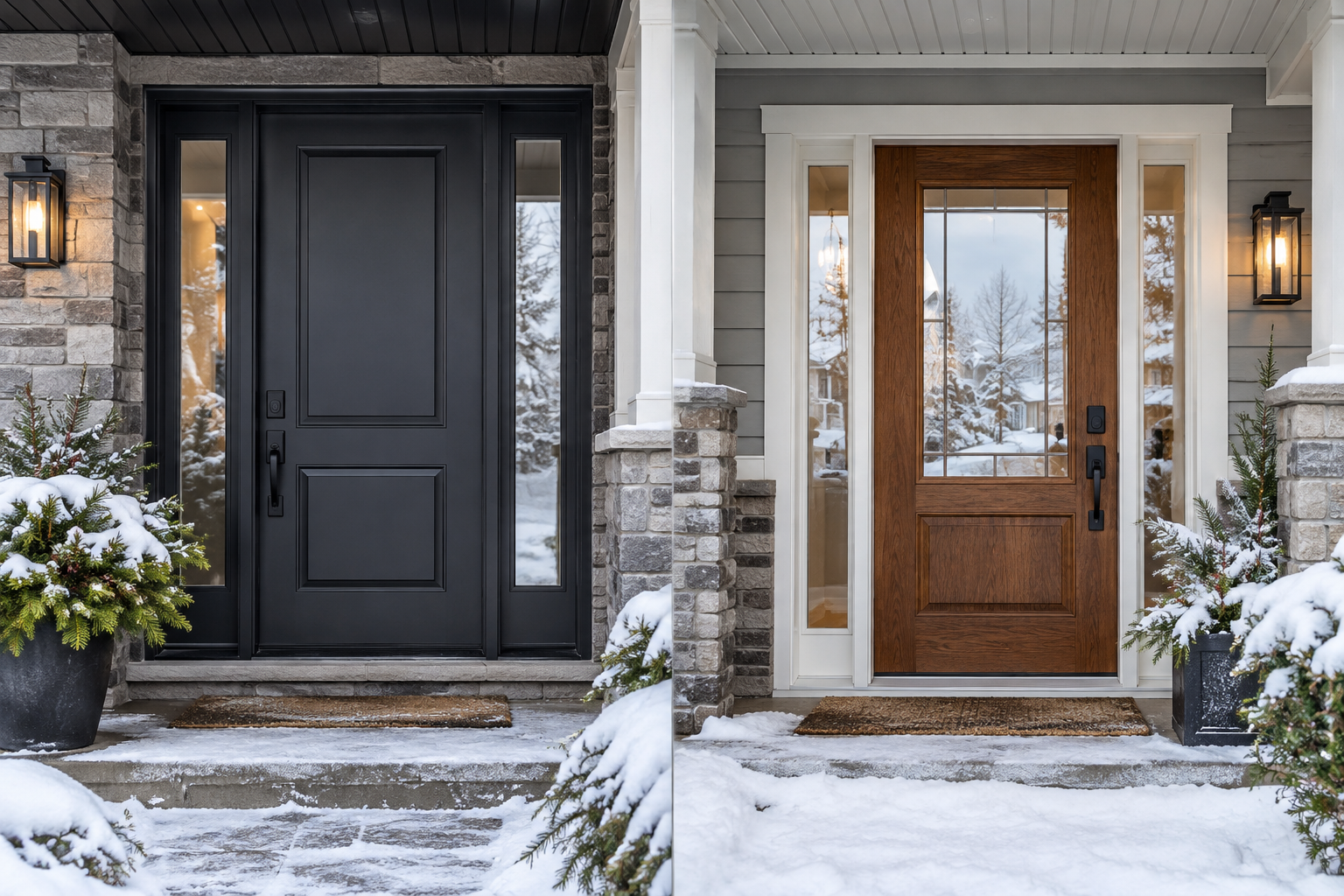
Wood Doors
- Provide a natural and classic appearance
- Offer decent insulation when well-maintained
- May expand or contract with humidity changes
- Extremely strong and secure
- Can maintain good insulation with proper core filling
- May absorb external heat if exposed directly to sunlight
- Highly energy-efficient and stable
- Resistant to warping, cracking, and swelling
- One of the best choices for hot climates
Choosing the right material helps reduce heat transfer and keeps your indoor temperature more stable during extreme weather.
5. Door Alignment and Frame Stability
A properly aligned door is essential for maintaining a tight seal. Even the best door will fail if it is not sitting correctly in its frame.
Misalignment can lead to:
- Uneven gaps that let hot air in
- Difficulty closing or locking the door properly
- Increased pressure on hinges and seals
- Long-term structural weakening
Common causes include foundation settling, hinge wear, or seasonal material expansion.
Fixing alignment ensures full contact between the door and frame, which improves insulation and prevents energy loss.
6. Long-Term Heat Exposure Damage
Front doors exposed to constant sunlight and high temperatures gradually degrade over time. This damage is often slow and unnoticed until performance drops.
Possible effects include:
- Fading color and dull appearance
- Surface cracking or peeling paint
- Slight warping in structure
- Weakening of insulation materials
These issues reduce the door’s ability to block heat effectively. Regular maintenance or protective coatings can significantly extend the life and performance of your door, especially in intense summer conditions.
7. Energy Efficiency Starts at the Entrance
Many homeowners underestimate how much energy is lost through the front door. If it is not properly sealed or insulated, your cooling system has to work much harder.
This leads to:
- Higher electricity bills
- Constant AC usage without proper cooling results
- Uneven indoor temperatures
- Reduced energy efficiency across the home
Improving your front door performance directly supports your overall home efficiency. Even small improvements—like sealing gaps or replacing old weather strips—can noticeably reduce energy waste.
This is why professionals like Alex Windows always emphasize that doors and windows work together as a complete insulation system.
Before the heat becomes intense, your front door deserves attention just like any other part of your home. Ignoring it can lead to heat leaks, rising energy bills, and constant discomfort during summer months. By checking alignment, sealing gaps, replacing weather stripping, and understanding material performance, you can significantly improve your home’s cooling efficiency. A well-maintained front door doesn’t just block heat—it supports your entire indoor comfort system. As Alex Windows often reminds homeowners, strong windows and doors create a balanced indoor environment where cooling systems work smarter, not harder. So take a few minutes today to inspect your front door properly. That small step can make your entire summer cooler, more efficient, and far more comfortable.